
Article By Nathan Morrill
Machine guarding is critical to the safety of a design. A guard must stay secured, block access to hazardous moving parts, and support the work employees are expected to do.
This article looks at a case I worked on as a mechanical engineering expert witness. In this case, there was a machine guarding incident where an unsecured guard and a difficult lubrication procedure created avoidable risk. It shows why practical maintenance access, not just written compliance, matters in machine safety.
Key Takeaways
- Maintenance access should be considered during machine design, guarding design, and Job Safety Analysis.
- A machine may meet guarding requirements when used as instructed, but still create practical challenges that increase risk in the field.
- Small engineering changes, such as adding safe lubrication access, can improve compliance, reduce maintenance time, and help prevent unsafe workarounds.
Why Machine Guarding Details Matter
Machine guarding often depends on small design and maintenance details. In the case example, the machine had clear plastic covers over internal components. These covers allowed operators and maintenance personnel to see what was happening inside the machine while preventing physical access to moving parts
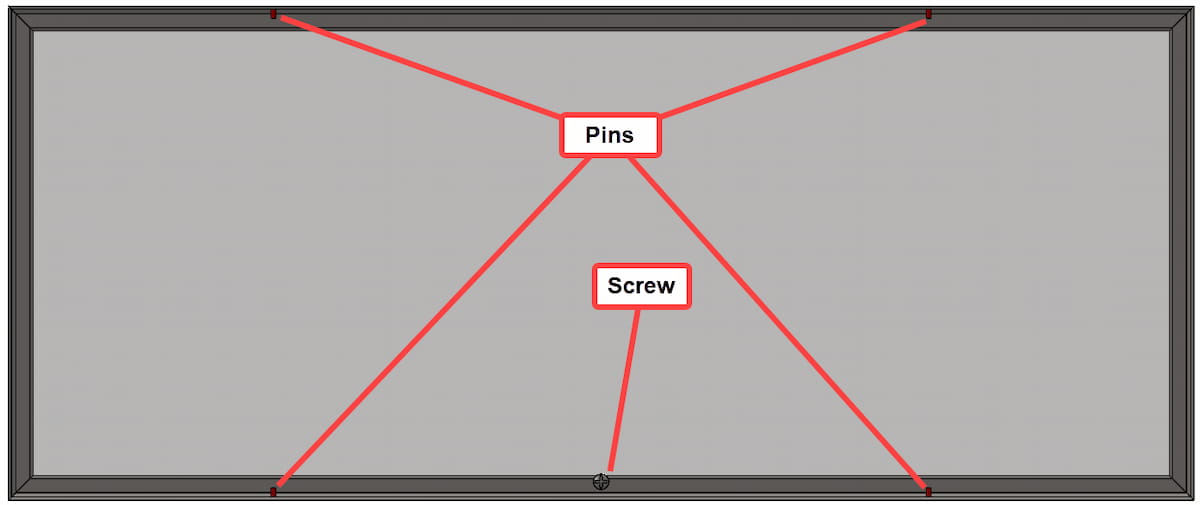
The guard sheet was held in place by two pins at the top and two pins at the bottom. A screw at the bottom secured the guard plate. When the screw was installed, the guard could not be moved.
At some point, however, a maintenance worker either forgot or chose not to reinstall the screw after removing the guard. Without the screw in place, the guard was easier to remove, but the machine was also less safe.
During one maintenance task, a worker decided to lubricate the machine while it was running. Because the screw was missing, the guard could be removed easily while the machine was operating. That combination of an unsecured guard, moving parts, and maintenance activity led to disastrous consequences.
OSHA Machine Guarding Requirements
OSHA’s general machine guarding standard, 29 CFR 1910.212, requires machine guarding to protect employees from hazards created by points of operation, ingoing nip points, rotating parts, flying chips, and sparks. OSHA also states that guards should be affixed to the machine where possible, or secured elsewhere if attachment to the machine is not possible. (osha.gov)
In this case, when the screw was properly installed, the guard was securely attached to the machine and prevented access to hazardous areas. Under those conditions, the guarding functioned as intended.
Machine Guarding and Lockout/Tagout During Maintenance
Maintenance work can introduce different hazards than normal operation. OSHA’s lockout/tagout standard, 29 CFR 1910.147, applies to servicing and maintenance activities where unexpected energization, startup, or release of stored energy could injure employees. (osha.gov)
The machine’s operating instructions stated that lubrication should only occur when the machine was turned off and lockout/tagout procedures had been applied. The procedure was to shut the machine down, apply LOTO, perform the lubrication task, reinstall and secure the guard, and then return the machine to service.
From a compliance standpoint, the procedure addressed the hazard. From a practical standpoint, it created a challenge.
The Practical Problem: Safe Procedures That Are Difficult to Follow
The incident revealed an important issue: operators felt that lubricating the machine according to the manufacturer’s specifications was difficult.
The machine had over ten feet of multiple chains that required lubrication. Not all sections were easily accessible while the machine was off. To follow the procedure as written, operators had to:
- Turn off the machine
- Apply lockout/tagout
- Lubricate the accessible chain sections
- Close and secure the guards
- Remove lockout/tagout
- Advance the machine
- Turn it off again
- Reapply lockout/tagout
- Repeat the process until all required chain sections were lubricated
The procedure may have been safe when followed exactly, but it was time-consuming and cumbersome. That matters because difficult maintenance procedures can encourage shortcuts, especially when workers are under time pressure or have performed the same task many times before.
Engineering a Safer Maintenance Solution
After the incident, a small hole was added to the guard. This allowed lubrication to be performed while the machine was running without requiring the guard to be removed.
The guard still prevented access to hazardous moving parts, but the modification made the lubrication process easier and faster. More importantly, it reduced the incentive for workers to remove the guard or leave it unsecured.
From a safety engineering perspective, design solutions that eliminate the need to remove guards are generally more reliable than procedures that depend on repeated lockout/tagout cycles. Any such modification should be evaluated to ensure it does not introduce new hazards or create access to moving components.
This is the practical value of thoughtful machine guarding design. A guard should protect workers from hazardous motion, but the broader system should also account for the tasks workers actually need to perform.
The Role of Job Safety Analysis in Machine Guard Safety
A Job Safety Analysis, or JSA, can help identify where written procedures and real-world work practices may diverge. In a machine guarding context, a JSA should consider questions such as:
- What tasks require access near moving parts?
- Can routine maintenance be performed without removing a guard?
- Are guards easy to reinstall correctly?
- Could a small design change reduce the need for guard removal?
- Are operators likely to bypass the guard and its securement means because the task is otherwise difficult?
These questions are important because safety failures often occur in the gap between a compliant design and how the machine is actually used, maintained, and serviced.
Compliance Is the Baseline, Not the Full Safety Strategy
This case demonstrates that OSHA guarding requirements are essential, but compliance alone may not answer every practical safety question.
When properly secured, the machine guard prevented access to hazardous components. When lubrication was performed according to the operating instructions with lockout/tagout applied, the procedure addressed the risk of hazardous energy exposure. But the difficulty of the lubrication process created a practical problem that contributed to an unsafe workaround.
The better long-term solution was not to make the guard easier to remove. It was to design a way for lubrication to be completed without removing the guard at all.
Effective Machine Guarding Requires Compliance and Practical Design
Machine guarding should be evaluated not only by whether a guard exists, but by whether it remains secured and supports safe operation and maintenance. In this case, a missing screw changed the safety function of the guard, and a difficult lubrication process contributed to unsafe maintenance behavior.
The larger takeaway is that effective guarding requires both compliance and practical engineering judgment. With thoughtful design, clear procedures, and thorough Job Safety Analyses, organizations can maintain OSHA compliance while making routine maintenance safer and more efficient.
About Alpine Engineering & Design
At Alpine Engineering & Design, our team evaluates how machines are designed, guarded, maintained, and used in real-world work environments. Our machine safety engineering services help organizations identify hazards, evaluate guarding and maintenance procedures, and improve safety before incidents occur. When litigation involves questions about guarding design, access to moving parts, maintenance procedures, or OSHA-related safety issues, our machine guarding expert witness services provide technical analysis grounded in engineering experience and practical machine safety principles.
Machine Guarding Compliance FAQ
Does modifying a machine guard void OSHA compliance?
Not inherently. A guard modification, such as adding a lubrication access point, should be evaluated based on whether the guard still prevents access to hazardous moving parts, remains securely attached, and does not create a new hazard. Any modification should be reviewed through engineering analysis and a Job Safety Analysis before the machine is returned to service
What does OSHA say about lubricating machinery near guards?
Lubrication can fall under OSHA’s lockout/tagout standard when the task exposes employees to unexpected startup, machine movement, or release of hazardous energy. If lubrication requires removing a guard or reaching near hazardous moving parts, the procedure should be reviewed for lockout/tagout requirements. Where lubrication can be performed through a properly designed guarded access point, the guard may reduce the need for removal while still helping protect employees.
Why should maintenance access be considered in machine guarding design?
Maintenance access matters because routine tasks that are difficult, slow, or frustrating can increase the likelihood of unsafe workarounds. If workers must repeatedly remove guards to complete ordinary maintenance, the design should be reviewed to determine whether safer access, revised procedures, or engineering changes could reduce risk.
Do machine guards need to be secured?
Yes. OSHA states that guards should be affixed to the machine where possible, or secured elsewhere if attachment to the machine is not possible. A guard that can be easily moved, removed, or left unsecured while the machine operates does not meet OSHA’s requirements and may not provide protection from hazards.
How can a Job Safety Analysis help with machine guarding?
A Job Safety Analysis can help identify where workers interact with machinery, where guards may need to be opened or removed, and whether maintenance procedures are practical. It can also help determine whether safer access points, revised procedures, additional training, or engineering changes could improve safety or compliance.